Thursday, July 17, 2008

Treiber Samsung Scx4x16

LASKER

WORLD CHAMPION
BIOGRAPHY
THE GAME LASKER
CHECKMATE
MJAE
STRATEGY

FEDERATION CHESS AND MATHS
COMPUTER
EINSTEIN


"the failures are not two conflicting
intelligences but two wills" Emanuel Lasker

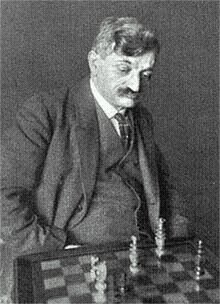
grew up in a poor family. But his father, even if it occupied a subordinate use to the local synagogue, has always sought to ensure a good education to his two son, Berthold, the eldest, and Emanuel.

Thus, Berthold had he the chance to leave very early in Berlin to continue his studies. There does not have resources sufficient, he earned his living doing (in parallel) activity "sparringpartner", praising its services in a cafe, to those who wanted to play cards or chess.

In turn, Emanuel became fascinated with the noble game after learning the rules, with Berthold at the age of 11. The youngest of the Lasker proved very quickly, too, a predisposition exceptional, both for Chess, for Mathematics.

In March 1888, then aged 19, he joined his elder brother in Berlin. Following the path traced by this brother "exemplary", he enrolled at the same university. In addition to coffee, he began to attend or even to replace his brother, in order to teach chess.


But his father refuses to see his younger brother to follow this bad example. He insisted that Berthold Emanuel place at another school in order to remove the coffee. Luckily, the director of this new school was a good chess player. He urged Emanuel to engage fully in the game and in the studies, especially recognizing his immense talent for mathematics, since the young E. Lasker was able to solve exercises in 2 hours, when his comrades needed 5 hours, however, Emanuel continues to frequent the cafe, because money was missing.

But the practice pays off, and he plays better and better, gaining most of its parts, despite the handicap made a pawn, a knight or a tower.

In 1889, after securing his return to the Faculty of Mathematics, he began playing competitively, and boast the title of Master at the Tournament of Breslau. The playing career at the top level irresistibly attracts, especially since it is aware of his strength, having already won the Masters recognized as K. von Bardeleben, J. Mieses, especially H. Bird in 1890 in London.

But his main interests are many, and this omniscient thinker wants to do everything! He is interested in philosophy, cards, game theory, as in drama. Therefore, his life is like a part simultaneously.

order to move faster, E. Lasker stays in England, where he beat the best local players. It offers a match to S. Tarrasch, renowned for being one of the best players in the world, but it refuses, saying that his challenger has yet to prove his strength!

E. Lasker decided to embark for the United States, where it crosses Route 1 World Champion, W. Steinitz. He travels, he played and won tournaments and games. It provides simultaneous. And most importantly, it prepares to face W. Steinitz, world title at stake in New York. The match ends

May 26, 1894, a victory E. Lasker (+10 -5 = 4), which is sacred and the second official World Champion. The new No. 1 in the world is young (25 years), his style is dazzling.

With a fierce determination and an incomparable foresight, it will retain its crown for 27 years, representing an absolute record! After 8

defenses victorious, E. Lasker finally lost his title in 1921 at the age of 52 years, defeated by the Cuban genius JR Capablanca. But the fallen champion showed exceptional longevity.

He won again some of the biggest tournaments, such as New York in 1924. E. Lasker felt a deep respect for W. Steinitz and his knowledge of the game but it will go much further. While

W. Steinitz had enacted the precepts of modern positional play, systematizing principles, E. Lasker will not only deepen and revitalize this legacy, but handle enrich the theory of new tactical and psychological aspects.

It was the first to explain the true nature and importance of the combination. He also understood first the importance of psychological factors, availing itself of a particular method, based on the destabilization of his psychic adversaire.Ainsi, voluntarily conceding material or positional advantage, or even playing unusual shots and sometimes illogical, he led his rivals to return to chaotic positions, depriving them of all analytical benchmarks. In

register positional play, E. Lasker applied three basic precepts: 1. Playing with a plan, this first principle is valid, he said, both chess and in life (cf. "Lasker's Manual of Chess, 1927). 2. Create weaknesses. 3. Avoid weaknesses. Otherwise, he understood better than W. Steinitz dynamic nature of pawn structure. He completed

culture dogma of limiting the activity of the opponent's pieces, and the idea of "blockade" (long before Nimzovitch A.!). He was less successful in the openings, although some systems are named after him. Also, he often sought to avoid forced variations, compensating for its shortcomings by a deep understanding of middle game and finals. As such, it has never really applied the principle of "rapid development" in the opening, which was yet to figure axiom since the advent of P. Morphy. In contrast, he introduced the concept of sustainable equilibrium position.


Alongside his playing, E. Lasker was a brilliant thinker. He was awarded the title of Doctor in Mathematics and Philosophy, writing many books on Philosophy and Chess, as the famous "Common Sense in Chess" or "Common sense in Chess", published in 1896, which became a bestseller.

He studied game theory, analyzed from a mathematical point of view and philosophy in his book "The Fight". He also wrote an essay on futuristic human relations, entitled 'The Community de l'Avenir "in 1940, a year before his death. But it was his master work "The Philosophy of the Infinite," which marked some of the brightest minds of his time, as the physicist Albert Einstein. Inevitably, these two brains out of joint became friends, to the point A. Einstein pointed E. Lasker as one of the most interesting people he met during his life. Both had a profound sensitivity to the metaphysical doubt, and A. Einstein was impressed by the personality of rare E. Lasker, regretting even as it has not devoted his entire life to science. Physicist admired the independence of mind Champion, going so far as to conclude that the game was for him a comfortable way to earn a living rather than a passion. But A. Einstein did not know the "magic world" of the 64 squares! Also, it is possible to conclude that he had (for once) slightly wrong ...


A party, which took place in 1895, had a particular challenge. It was raced at the famous tournament in St. Petersburg in 1895. E. Lasker to confronted the American champion H.-N. Pillsbury, which, through its exceptional level of play, seemed like a contender for the supreme title. Despite some approximations, this game became famous as one of the most fascinating parts of the story. At the height of the intensity of combat, E. Lasker demonstrates qualities of strategic, tactical and psychological accuracy outsized.

Excerpts from the article Europe-Echecs, March 2003, Darko Anic

Denise Milani Manual Labor

CHAIM SOUTINE


C. SOUTINE
BIOGRAPHY
FLAMBOYANT
HISTORY
PHOTO GALLERY

ART


1893 - 1943
Nationality Russian born in 1893 in Smirlovitch Solomon Soutine, 62, born in Pontovitch, Russian nationality and Sarah born Smirlovitch Soutine, Russian nationality. Resident Passage of Danzig. Identification produced: Passport to established Russian Vilna on 20/03/1913 (Julian), ie 02.04.1913.

BIOGRAPHY:

Born in a ghetto near the Berezina, tenth child of an impoverished tailor, Soutine initially follows the course of the School of Fine Arts in Vilnius, then settled in Paris in 1911, same time as other artists from Central Europe. Soutine lived in the Beehive, where his neighbors Chagall, Lipchitz, and Cendrars Kremegne ; He befriended Modigliani. The technique of Soutine, who was influenced by Van Gogh, is oriented mainly to the effects of color.

1893 Birth of Chaim Soutine at Smilovitchi, near Minsk. It is the tenth of eleven children of Zalma (Solomon) and Sarah Sutin. His father was a little Jewish tailor from the village and family Soutine - when possible - fed on boiled potatoes, herring and black bread. Soutine has always complained of being hungry, even in its glory is even said that he ignored the existence of white bread until the age of fifteen. Soutine kept his place of birth images of exhausted and starving, the haunting memories that are always found in his paintings, even in his landscapes and still lifes. In 1902

nine years he was apprenticed to his uncle who is a tailor in Minsk.

1907 Chaim Soutine went to Minsk to study drawing. A man named Krueger, director of the Jewish artist school taught him the rudiments of art practice. There he meets an art student, Kikoïne Michel, who became his friend

1910 He moved to Vilna and tinkered with a photographer to support himself. He enrolled at the Academy Fine Arts but troubled and nervous, failed the entrance exam, due to an error of perspective. Shortly after, he represents and succeeds. Thereafter, it will be considered by his teacher Rebakoff as a brilliant student. He took classes at the Ecole des Beaux-Arts. A medical aid financially.

1912 Go and paint: it is Dr. Rafelkes which Chaim was a time courted the girl, which will partially fund the trip to the City of Light. And it Pinchus Krémègne will bring the two friends in Paris: join them share their dog's life to "The Hive"!. Soutine 20 years ago, he followed his friend Pinchus Krémègne and arrives in Paris July 14, 1913 with the painter Michel Kikoïne. He lives at 9 Boulevard Edgar Quinet, then rented a studio at "La Ruche", Rue Dantzig, proletarian district of Vaugirard, south of Paris where he lives with Michael and Kikoïne Pinchus Krémègne. It follows two years of courses Fernand Cormon and works as a porter at the station.

1913 - The Hive at 2 Danzig passage had been transported in 1902, the former flag of the wines of the Universal Exhibition of 1900 at the initiative of the sculptor Alfred Boucher. The Villa Medici Libre attended by up to 140 artists at once, which Cendrars Zadkine, Leger, Chagall ... For a few dozen francs for rent, was the bohemian life near Vaugirard slaughterhouses and "fortifications" are now extinct ... In 1913, Soutine enrolled at the Ecole Nationale des Beaux-Arts: he works at the shop Cormon which a generation ago was a time the "Professor" Toulouse-Lautrec and Vincent Van Gogh, in Montmartre. .. He lives

1914 City Falguière met, among others, Modigliani, who became his intimate friend and present it to his dealer Leopold Zborowski.

1914 Saturday, August 2, 1914: Mobilization Order General.

Tuesday, August 4, 1914: Soutine obtained from the police headquarters of the 15th arrondissement of Paris for a residence permit: he left Paris to temporarily Livry-Gargan where Kikoïne the house.

Soutine volunteered and will be in a group that digs trenches ... Back in Montparnasse, everything has changed: some friends as Kisling who volunteered and joined the front are gone ...

1919 he met Zborowski who sends in the south of France, Ceret where he lives and works. First meeting with Madeleine and Marcellin Castaing "La Rotonde".

1920-1922 Cagnes breaks. At Cagnes, at the end of January 1920, he learned the news of the death of Modigliani and is shaken.

1923 The great American collector Albert C. Barnes is going to buy a blow sixty paintings by Soutine that begins to emerge from its isolation.

1924 Stays in Paris and Cagnes. Soutine worked in a shop located rue du Mont-Saint-Gothard in Paris. He saw some time with Deborah Melnik he met in Vilna, where she studied music, but separated from her fast enough.

1925 Impressed by Rembrandt, Soutine painted the beef carcass. He refuses to recognize a daughter, Aimee, Deborah Melnik said that result from their association.

1927 Personal exhibition at the Galerie Bing, Paris

1927-1928 Series Pastry and Communicants.

1929 Soutine became friends with Castaing. First monograph by Elie Faure. 1931-1935

He spent the summer Leves near Chartres, host of Marcellin and Madeleine Castaing, who became his main buyers.

1937 Soutine moved to Paris in an apartment in the Rue Villa Seurat. Meet at the coffee "Dome" Gerda Groth who fled Nazi Germany and he calls "Miss Guard. She became his companion.

1939 Soutine and Miss Guard living in the village of Civry-sur-Serein, in the Yonne. He made several trips to Paris to consult doctors about his stomach ulcers.

1940-1942 On 15 May, Ms Garde is deported to Gurs camp in the Pyrenees. Accompanied by Marie-Berthe Aurenche, the former wife of Max Ernst, Soutine lived in small villages in Indre-et-Loire where he is hiding from the Nazi occupiers, particularly on Veude Champigny, near Tours. He painted landscapes of admirable.

1943 August 7, it takes him, rushed to the hospital. He died Aug. 9 in Paris a intestinal perforation. Chaim Soutine is buried in the cemetery of Montparnasse, August 11.


"I once saw the village butcher cut the neck of a goose and drain the blood. I wanted to scream, but her cheerful tied me throat ... This cry, I feel again. When I was a kid, and I drew a clumsy portrait of my teacher, I tried to free myself from that cry, but in vain. When I was painting a beef carcass, it was always the same cry which I wanted to get rid of. I have not succeeded! "

"I watched the lights of the sun and shadows will continue the curtains of dust still ... my father, sitting like a Buddha, sewed mechanically near the gray window and then stopped and, without looking up, turned a page ... "Rabbi Menachem Mendel of Works provides three things that are suitable for real Jew: an absolute kneeling, a cry without a voice, a dance move. "

France-Belarus.com,

LIFE Chaim Soutine

Samples Of Church Welcome

ALBERT SABIN


HISTORY
BIO
INSTITUTE
POLIO VACCINE


A Sabin


The name is associated with the Albert Sabin oral polio vaccine he developed in the 1950s. Research virologist this does not, however, concentrated on immunization, he also studied the role of viruses in some cancers.


Sabin, Albert Bruce (1906-1993), Russian-born American virologist who developed an oral vaccine against poliomyelitis based on a strain of live virus.
Born in Bialystok, Sabin emigrated with his parents in the United States in 1921. He received his medical degree from the University of New York in 1931. After working for the Rockefeller Institute, he entered the University Children's Hospital and the Faculty of Medicine, University of Cincinnati. Sabin
devoted much of his life to research on vaccines against strains of polio virus crippled or killed many children. (See Immunization.)
will be remembered for the very serious epidemic that raged from 1942 to 1953. By the mid-1950s, he managed to obtain a strain of virus that does not cause paralysis of central nervous system in animals. The Sabin vaccine was attenuated and alive, unlike that developed by the physician and epidemiologist American Jonas Salk, who was a serum (injected) inactivated. The vaccine was successfully tested on Sabin and other volunteers, before undergoing a series of trials around the world between 1958 and 1960.
After 1961, Sabin concentrated his work on the role of viruses in cancer encarta


1956 - October 6

An oral vaccine against polio
Albert Sabin of the University of Cincinnati (State of Ohio) announces the development of an oral vaccine against polio. WHO now recommends the use of this vaccine, which unlike the vaccine developed by Jonas Salk in 1954, is prepared from a live virus inactivated. Polio has been eradicated from Western countries, but this is still so rampant in some twenty countries